“I’m 38 and I still don’t like the sound of fireworks. Or thunder.”
In 1984 Sarajevo was on top of the world. As host for the 1984 Winter Olympics, the world’s media, dignitaries and sports stars such as figure skaters Torvill and Dean descended on the city, which accommodated them in style. The Games were a success, broadcast across the globe. The inhabitants of Sarajevo were proud.
Ten years on, and the city was part way through the longest siege of the 20th century. In response to Bosnia’s 1992 declaration of independence from Yugoslavia, the Army of Republika Srpska, backed by the Serbian authorities in Belgrade, was camped out in the hills surrounding the city. They pounded the houses and shops below them with heavy artillery, on average over 300 shells per day. They also employed snipers who regularly shot at Bosnian civilians walking down the street; 4000 civilians were killed by sniper fire. The siege stretched from 1992 to 1995. Overall, 100 000 people died in the Bosnian war.
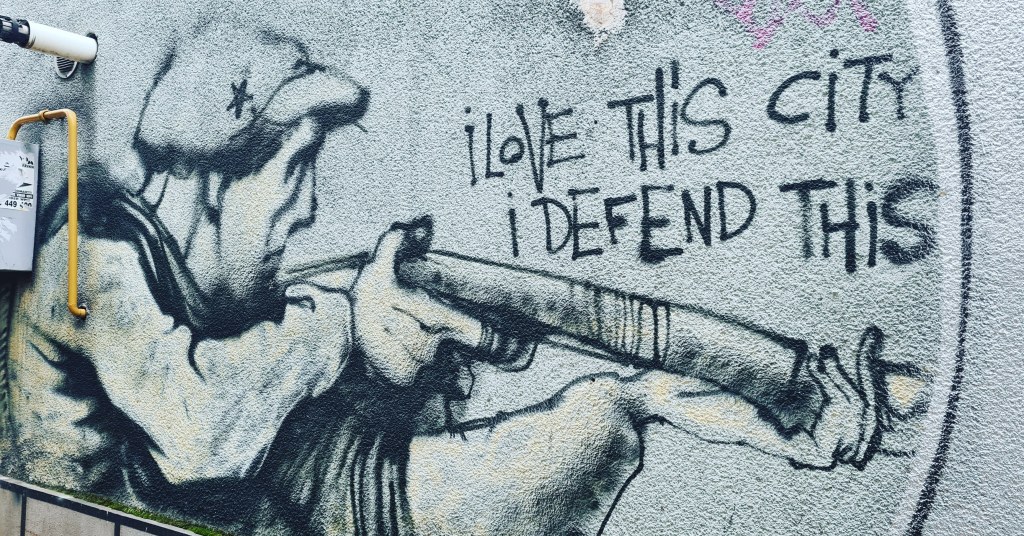
The scars of the Siege of Sarajevo are everywhere. Both in the shrapnel marks and bullet holes in walls and floors, sometimes deliberately filled in with red paint as a memorial, but also in the hearts and minds of its residents, who cannot forget the trauma of those long years under constant bombardment.
But the 38 year old local who told of his trauma was also keen to point out the good sides of Sarajevo. The city has rebuilt, and today is a flourishing tourist destination. The lively Old Town has a distinctly eastern feel, with shisha bars, baklava, coffee shops and mosques, a product of long years of Ottoman rule. ‘Coppersmiths Alley’ is a narrow, cobbled street, flanked by small shops with craftsmen fashioning metal goods for sale in front of your eyes. A large clock tower will tell the time, but not in the usual sense: it is a countdown clock, so nine o’clock means nine hours until sunset, four o’clock means four hours until sunset, and so on. Useful for Ramadan, and also for tourists who wish to climb one of the surrounding hills in time for a beautiful view as the sun dips out of sight.
Juxtaposed to the Ottoman Old Town is the imposing, Baroque architecture that is a legacy of the Austro-Hungarian Empire’s brief rule, from 1878 – 1918.
“They gave us trams, electricity, all these great buildings – sometimes we wish the Austrians would invade again,” another local joked.
The Austro-Hungarians are not coming back, however, since their empire no longer exists. It dissolved in the aftermath of the First World War. The most proximate trigger for that bloody conflagration was the assassination of Archduke Franz Ferdinand, which happened on the streets of central Sarajevo in June 1914. Nowadays the very spot where the Archduke’s car stopped, and where the assassin stood, are marked with metal plaques sunk into the pavement. The coffee shop that used to stand on that corner has been transformed into a museum about the event.
In the 1920s and 1930s, in the years of the first independent Yugoslavia, Sarajevo was a brilliantly diverse place. Muslims, Orthodox Christians, Catholics and Jews all lived alongside each other. Sadly, the vast majority of the city’s Jewish population perished in World War Two. And in the early 1990s most of the Orthodox Christians, who tend to be ethnic Serbs, migrated (on the advice of the Republika Srpska, who were planning the upcoming siege) a few miles down the road, to what is now East Sarajevo. To this day the city remains divided into Sarajevo and East Sarajevo, and an eternal flame burns in remembrance of the victims of the Second World War.

Nowadays the city is mostly Muslim, an impressive number of minarets peppering the skyline and reaching up to the heavens. A relatively liberal form of Islam appears to be practised here, with pork sold widely and alcohol readily available. One Muslim said that they felt they were ‘culturally Muslim’, but were not practising; the rest of their family was similar.
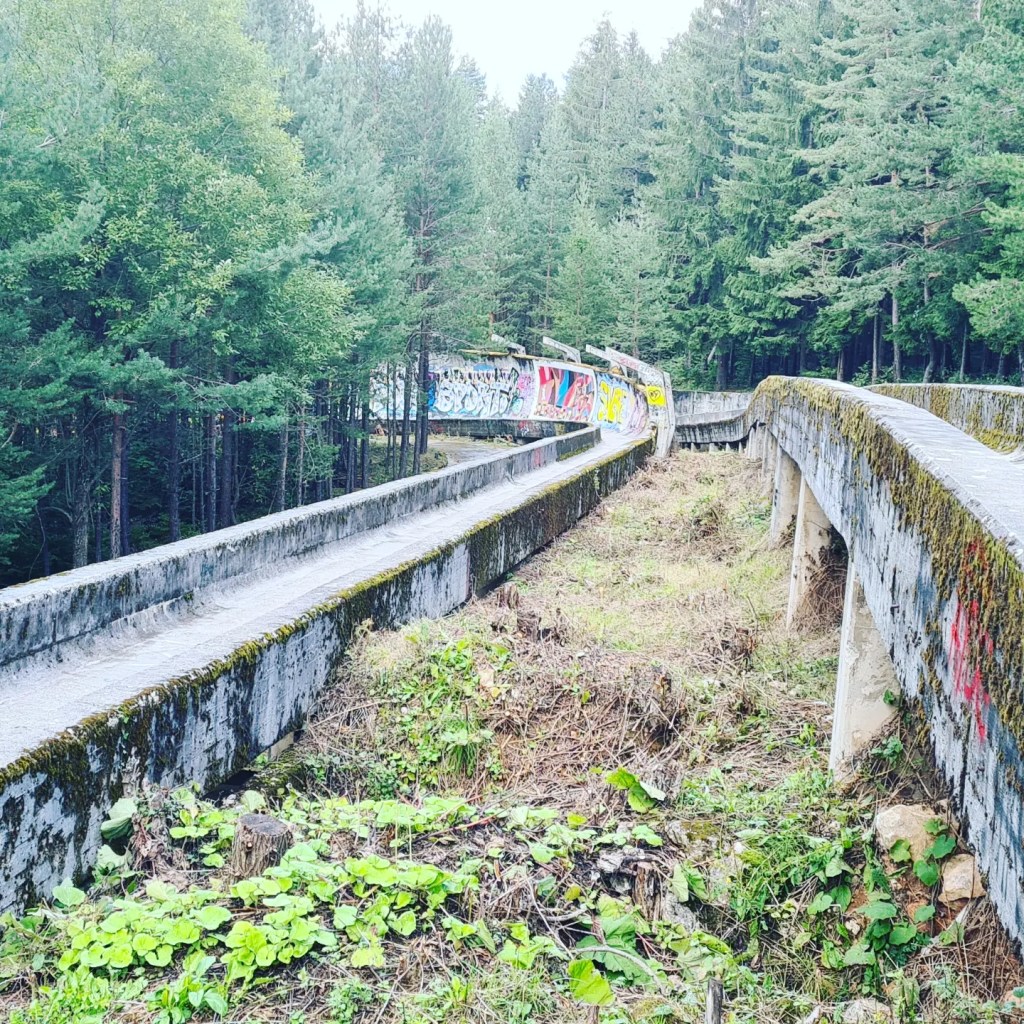
A ski lift, originally built for the 1984 Olympics, destroyed in the conflict but reopened in 2018, sweeps visitors up a nearby mountain for spectacular views and an enjoyable hike back down. A unique aspect of this hike is that the first section of the descent can be completed on an abandoned bobsleigh run. Built for the Olympics almost 40 years ago but disused for decades, the crumbling edifice of this enormous concrete snake is now covered in graffiti and frequented by tourists and locals alike. Watch out for cyclists, who occasionally decide to descend on two wheels, at barely controllable speeds.

Central Sarajevo’s coffee culture is difficult to tear oneself away from. However, no trip is complete without some time spent learning more about the recent conflict, both at the airport and at one of the many museums in the centre.
At the airport you will find the ‘Tunnel of Hope’. During the siege the city was surrounded by Serbian forces, except for the airport, which was controlled by the United Nations and designated a ‘safe zone’. However, residents of Sarajevo could not pass through the airport, and dashing across the runway was highly likely to result in death from Serbian sniper fire. So, the Bosnians dug a half mile long tunnel under the runway, to ferry essential supplies in, and evacuate the wounded. Although the English language guidebooks call it the ‘Tunnel of Hope’, the actual translation of the name is closer to the ‘Tunnel of Salvation’, as it played a vital role in saving the city.
As for the museums, the Museum of Crimes Against Humanity and Genocide is a powerful and poignant reminder of what occurred in Bosnia barely three decades ago. It outlines the siege, and also the other atrocities, such as the Srebrenica genocide, in which Serb forces massacred 8000 Bosnian men and boys over a few days in July 1995.
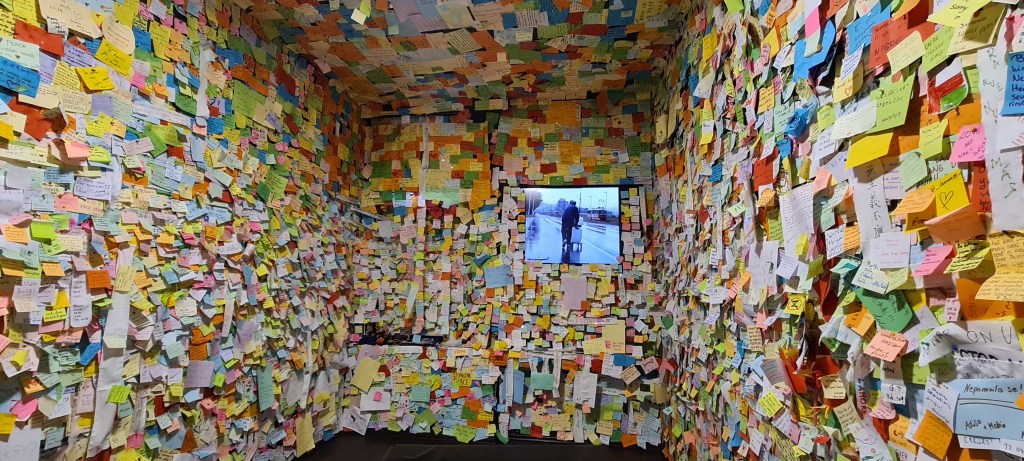
Some residents expressed their concerns that the country today is still suffering from the economic after-effects of the conflict.
“All the tourists go to Croatia and Slovenia. They associate Bosnia with war. Tell people to come to Bosnia!”, one implored.
“The European Union should let us in. We want the chance to prosper,” explained another.
“Things were better under Tito, better when we were all together. Serbia forced us to leave Yugoslavia, but now we want to be part of Europe.”
Here is another country where some people remember Tito fondly (see also the previous blog post, ‘Belgrade’). The dark side to his authoritarian regime is acknowledged, but it is not as simple as ‘communism bad, capitalism good’. The situation is reportedly different in Croatia, where brutal repressions against World War Two collaborators have not been forgotten. But in Bosnia, at least, some people valued the stability and relative prosperity of the communist era.
Some of the after-effects of the war sadly linger. In addition to detailing the horrors of the war, the museum also recounts how there was a popular television show in the former Yugoslavia in the 1980s. Named ‘The Surrealists Show’, it was a black comedy, basing sketches on surreal and dystopian scenarios that would ‘never happen’ in real life, including the disintegration of Yugoslavia and the need to bring in United Nations peacekeepers. In one such sketch, Sarajevo was divided into two parts, East and West. At the time, people laughed. That would never happen!
Today the show has been proven tragically prophetic. Yugoslavia has disintegrated, and the peacekeepers failed to prevent the Srebrenica genocide. Sarajevo is indeed split in two: Sarajevo, where the Bosnians live, and Sarajevo East, home of the Serbs.
The unbelievable has become reality. But despite this, Sarajevo is a charming, beautiful place. It is a bustling and lively city with a huge amount of culture and plenty of interesting, if at times upsetting, history. Its people want to welcome the world to their new country, and tell everyone their story. It is worth a visit, to hear them tell it.
 Somewhere Must Be Doing It Better
Leave a comment