Russians
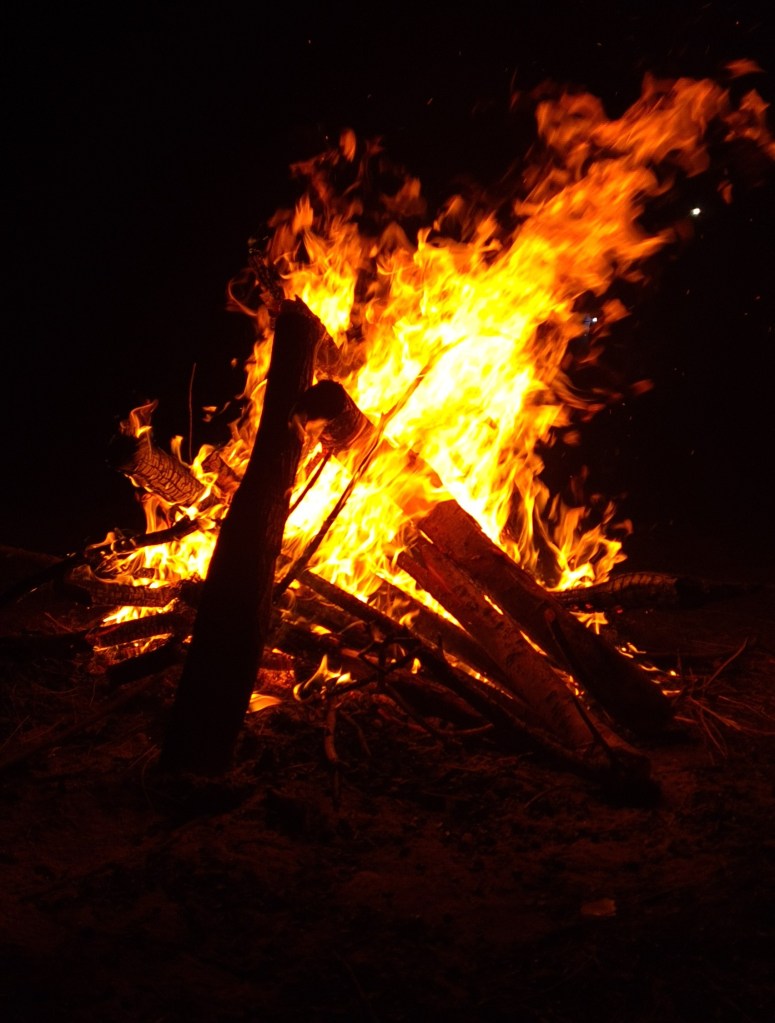
It is night-time on the endless Kazakh steppe, and the guests at a remote homestay are warming themselves around a bonfire. They roast marshmallows on sticks as the light from the flames illuminates their faces. Most are Russian.
“I have a mortgage on a flat, and a nice car, back in Moscow. But I left Russia when the mobilisation was announced, and I’m not going back,” explains one.
“I work for an IT company, so I can work remotely. I went to Kyrgyzstan first and now I’ve come here,” adds another. “I’ll work remotely indefinitely. I won’t return to Russia until Putin dies.”
Kazakhstan has seen a flood of young Russian men arrive, leaving their lives and families behind. They can stay for up to six months without a visa, and then simply need to leave for a day, for example to neighbouring Uzbekistan, before re-entering to be granted another six months.
“The Russian border guard gave me a real grilling,” the first man recalled. “It was 48 hours after the mobilisation, and she asked for the reason for travel. I said that I needed to go abroad to open a foreign bank account, as all our Russian ones are blocked for foreign transactions. The guard just looked at me and said, ‘You really don’t think I’ll believe that, do you?’ It’s the excuse everyone was using. But she still let me through.”
The men, in their twenties, say that there is support for the war amongst Russians. But they qualified that the support is certainly not universal, and tends to be stronger among older, more conservative citizens. The young – co-incidentally, those at risk of conscription – are less on board.
More wood is added to the bonfire, which crackles and spits miniscule embers into the air. Overhead, the stars shine more brightly than they ever would in the cities. The homestay is located in a tiny village, miles from the nearest large settlement, so the skies are clear.
“I spent two weeks in jail after attending a peaceful, pro-Navalny protest,” a third Russian explains, referring to the Russian opposition leader and anti-corruption activist Alexei Navalny.
He says it was not too bad. The regular jails were full, so they used an immigration detention centre instead, and he described his fellow inmates as “journalists, scientists, cool people.”
He speculated that, had he been employed by a company with close ties with the Russian government, such as Gazprom, his incarceration may have presented a problem at work. But given he is another IT worker, his company were “fine with it”.
The fire is in its dying phases now, flames no longer leaping skyward. A couple of men open a final beer and discuss the rental situation.
“The cost of a studio flat in central Belgrade has skyrocketed,” complains a Serbian who is present. “You could pay $1500 per month now.” The situation is similar in Almaty and Tashkent.
Putin’s war has driven these men apart from their families. A common theme was that they did not know when they would see their loved ones again. One, who was married, had his wife visiting for two weeks, but this was only temporary, and many others had girlfriends they had left behind at home. Their relationships are surviving for now, but the long term looks difficult. The war is wreaking havoc with people’s lives in Russia as well as in Ukraine.
Road trips
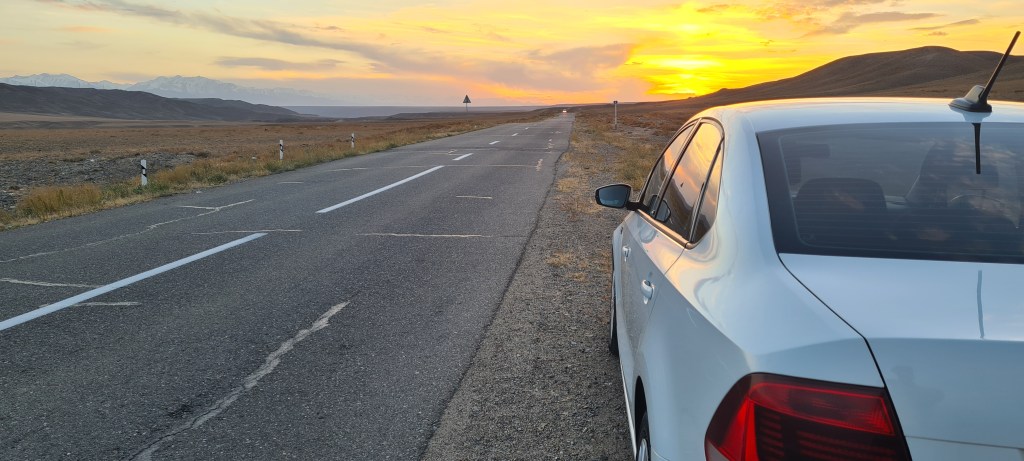
Most people associate Kazakhstan with vast expanses of flat nothingness, punctuated by herds of horses and the occasional road that stretches to the horizon. This is accurate, but one can also find beautiful mountains and lakes more reminiscent of Switzerland than central Asia. The distances between such varied scenery are surprisingly manageable.
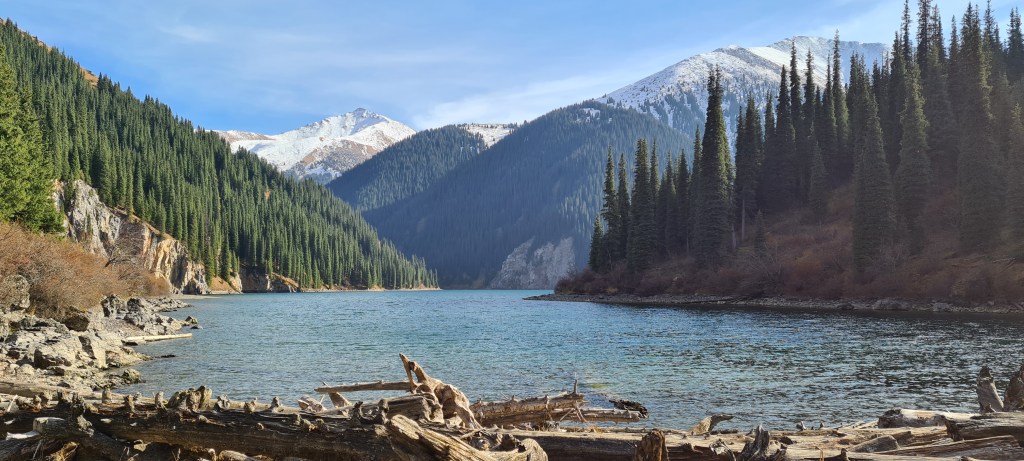
A cheap car rental and well paved roads will whisk you 300km out of Almaty to the Kolsai Lakes. Set amongst spruce-clad mountains with snow-tipped peaks, this is a pristine Alpine wonderland blessed with quietness and seclusion that is difficult to find in Europe.
A popular hike is uphill from Kolsai Lake One to Kolsai Lake Two. The five mile trek follows a stream through a forested valley, and for long stretches there is not a soul in sight. Kolsai Lake Two, about 2300m above sea level, is virtually untouched by humans. A lakeside clearing is nestled amongst the trees; camping is permitted, but most of the time it is deserted.

Further uphill still lies Kolsai Lake Three. Hiking here used to be permitted, but is currently forbidden as it is deemed too close to the border with Kyrgyzstan. An alternative for further hiking is Lake Kaindy.
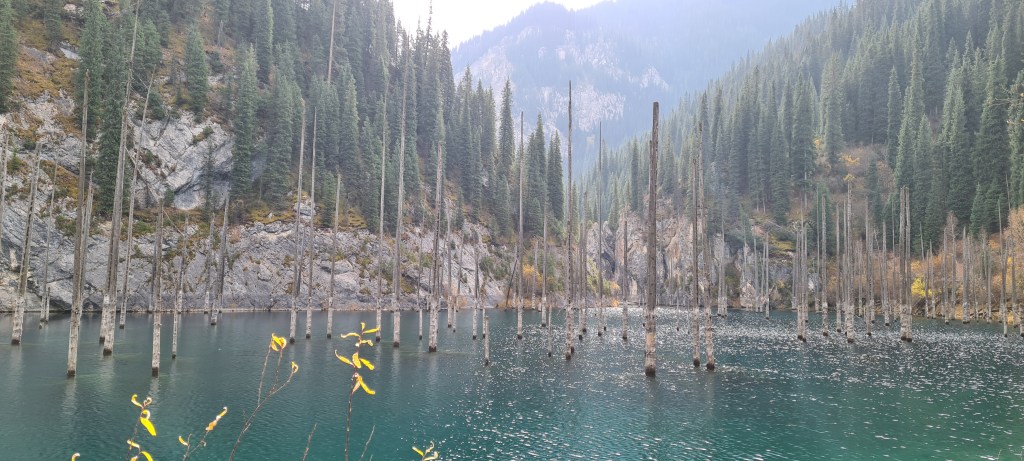
Lake Kaindy is less than 10 miles east of the trio of Kolsai Lakes. In geographical terms it is very young, essentially a newborn, given it was formed when an earthquake blocked a river in the area in 1911. The result was a flooded valley. Dozens of spruce trees were drowned in the lake, whose eerie blueish waters are glacially cold. Over time, their branches above the waterline have fallen off, leaving a ghostly ensemble of bare trunks. Peer beneath the surface, and branches and leaves are still visible, frozen in time in their icy tomb. Some refer to it as the ‘Dead Lake of Kazakhstan’.
Alternative hiking opportunities abound, not least around Big Almaty Lake, situated in Ile-Alatau National Park much closer to Almaty. More tourists will be found here, as it is less than 20 miles from the capital, but the scenery is similarly beautiful to the Kolsai Lakes.
The scenery in Kazakhstan is surprisingly varied. Were you to travel north-east from Almaty you would find desert, and sights such as ‘The Singing Sand Dune’, which makes an unusual whistling noise when the wind blows. Venture south-east to the lakes and mountains. Due east, you find Charyn Canyon.

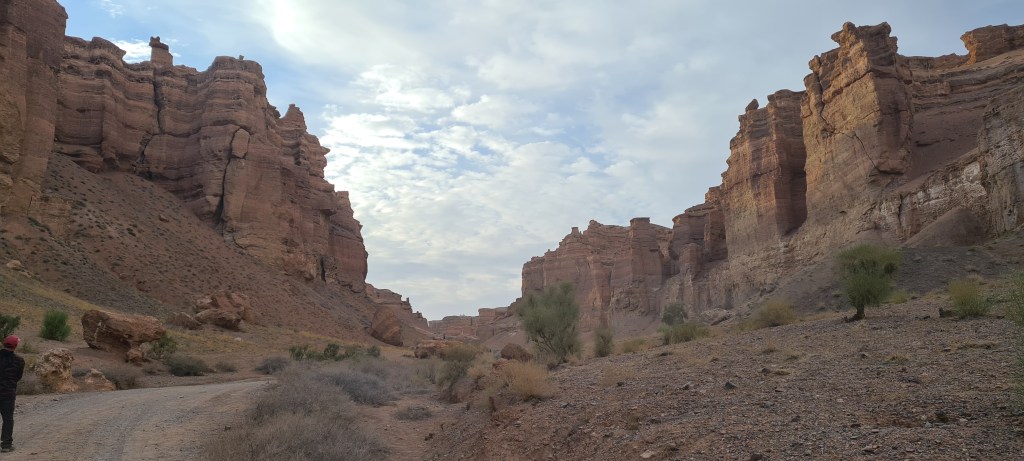
The Charyn River carved the canyon into the layers of red, sedimentary rock over tens of millions of years. The canyon is over 50 miles long and reaches 370m deep; it is said to resemble the Grand Canyon of the United States. A viewpoint provides a stairway down into the canyon, where a thirty minute walk along the dusty path at the bottom brings you to the Valley of Castles, the name for a majestic set of rock formations towering above the river.
Only a few hours of driving separates the canyon, the mountains and the desert. One can experience the south-western United States, central Europe and north Africa in one trip.
Therefore next time you are considering countries in which to experience ‘the great outdoors’, and locations such as Canada, New Zealand or the Alps come to mind, remember Kazakhstan. Mountains and lakes, deserts and canyons, endless steppe and boundless beauty.

 Somewhere Must Be Doing It Better
Leave a comment