In the first round of Guatemala’s 2023 parliamentary elections spoilt ballots topped the polling. Blank votes came in third place. Widespread disenchantment with the ruling classes led to a protest vote of such significant proportions that the spoilt and blank votes outnumbered those garnered by any individual party.
The causes are myriad and the roots of the problem run deep. This is why, despite alarm at the political crisis, it is encouraging to see some of the grassroots projects that are trying to make a real difference to the lives of normal people. Two such organisations are Project Ixcanaan and Proyecto Ecológico Sol y Verde.
I spent a week working with Project Ixcanaan, which means ‘Guardians of the Rainforest’. It was set up in the small village of El Remate, beside Lago Petén Itza, by Anne, a woman who has lived in El Remate for 29 years. Project Ixcanaan runs a medical clinic, a dental clinic and a children’s centre, helped build a school, and set up a women’s centre which is now ran by the women.
The medical clinic is usually staffed by a solitary nurse, who single-handedly deals with whatever problems walk through the door. Alice, my wife who is fluent in Spanish, translated for me for my week at the clinic.
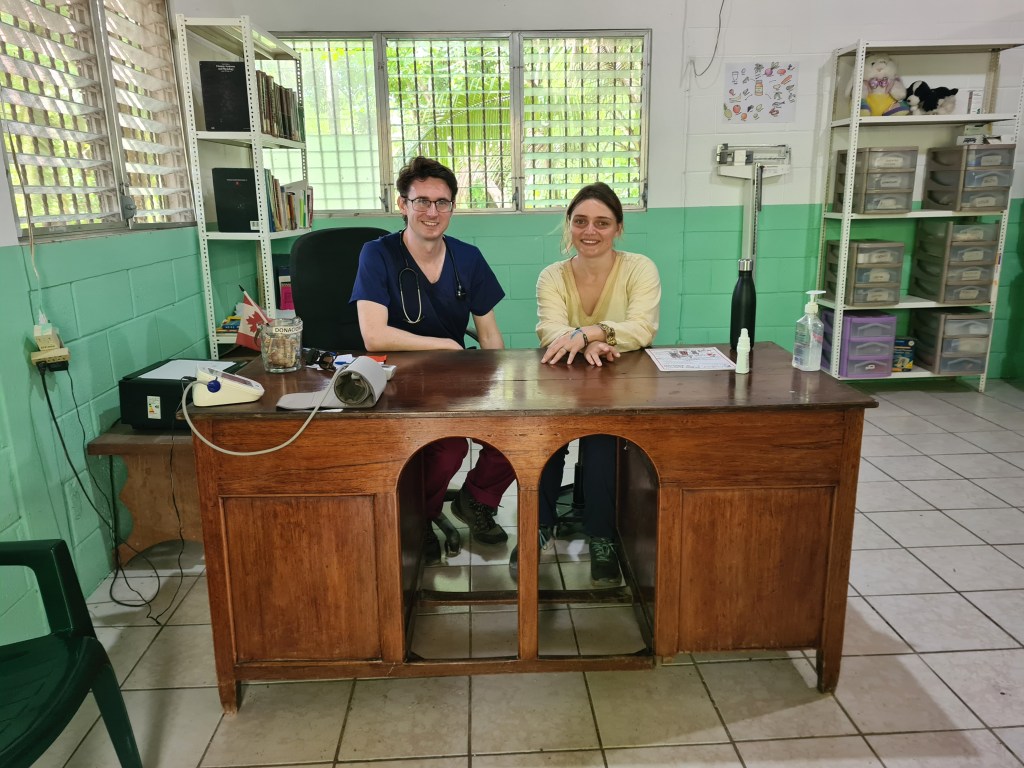
Some cases were very sad, such as the mother who was clearly embarrassed to discuss her daughter’s history of malnutrition. Other cases were alarming, like the parents giving their nine-year-old morphine as a treatment for migraines. And it can be particularly difficult to accept that some conditions which are easily addressed in a better-resourced setting, such as a six-year-old boy with speech delay who simply needed some speech and language therapy, are likely to to go untreated. This may lead to disastrous social and educational consequences for the child involved.
Other cases were more encouraging. One young woman told us she was feeling better when we bumped into her in the village, two days after we had been able to give her the antibiotics she had needed for weeks for persistent urinary tract infection symptoms. An anaemic patients’ tears of frustration at not being able to afford medications became tears of joy when I found a three month supply of iron tablets for her in the limited drug cupboard. And there was an emergency case: a man with clear meningitis symptoms, to whom I administered intramuscular antibiotics. But an ambulance was out of the question and, despite my repeated pleading, he said he would “think about” going to hospital and “maybe go tomorrow”. I’ll never know the outcome.

Local healthcare staff had plenty of stories to tell. One recounted being chased out of a rural village by machete-wielding natives when he attempted to visit as part of a vaccination programme. More terrifying still, another recalled being woken one night several years ago by a knock on his door.
“Do you work at the medical clinic?” Asked a balaclava-wearing man.
“No,” the healthcare worker lied.
“Yes, you do,” the gangster challenged.
“No, I don’t! I’ve got no medical training,” the worker protested.
“Yes, we know you do. And you’re coming with us.”
The narcos, who were passing through the area on their way north, led the healthcare worker out of his house and drove him to a clinic, where he was forced to open the facility in the middle of the night and suture an injured criminals’ wounds at gunpoint.
“Don’t hurt him,” snarled one man when the ‘patient’ winced, violently jabbing the end of his gun into the healthcare worker’s head.
A long time passed until the healthcare worker was able to talk about this.
Lack of resources and criminality are not the only challenges facing medical staff in remote Guatemala. Lack of education amongst the population, combined with difficult circumstances, leads to many making lifestyle choices that result in ill health.
If it was oppressively humid every day, you had little money, tap water made you sick and Coca Cola was cheaper than bottled water then what would you drink? Coca Cola and other fizzy drink consumption is rife and so is obesity, diabetes and tooth decay.
We held a diabetes education session to try to address this. Telling manual labourers in a swelteringly tropical country to exercise more is a difficult sell, but dietary advice is more appropriate and was well-received.
The diabetes session revealed some interesting local health customs. Whilst some traditional medicine, such as rubbing a live duck across a child’s stomach to cure diarrhoea, is unlikely to have any effect, some herbal remedies do, in fact, have potency.
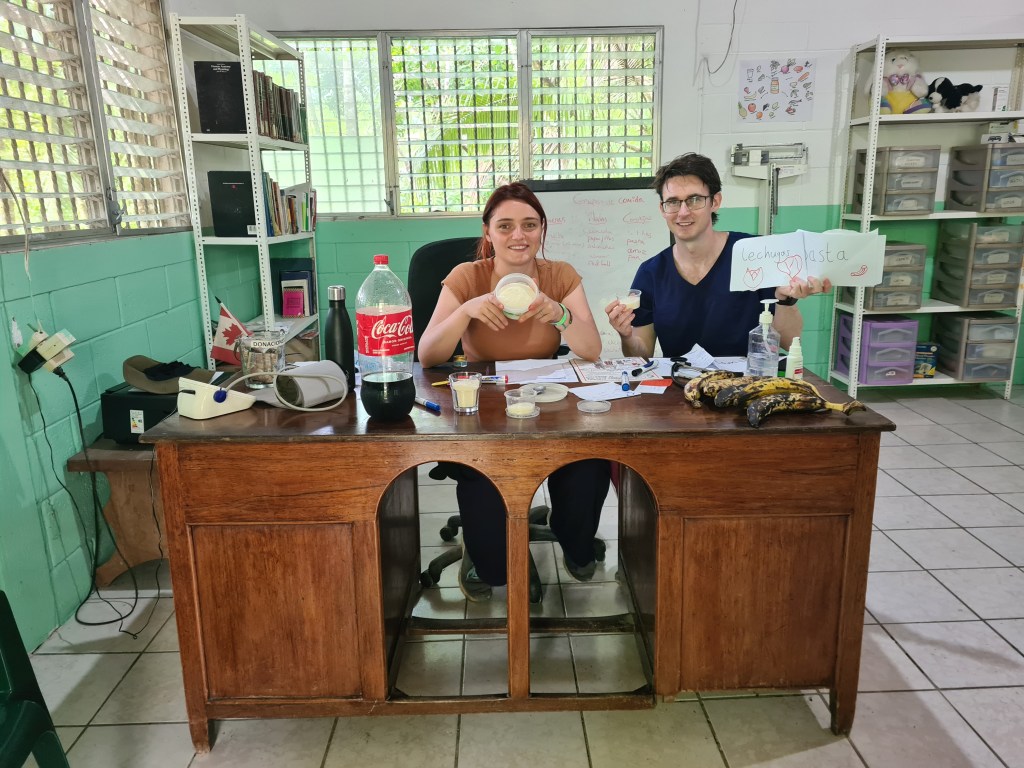
One woman explained that she was treating her husband’s diabetes with cinnamon and cloves, and she was worried as he was experiencing some ‘hypo’ episodes where the blood sugar goes dangerously low (the previous day it had dropped to 2.8mmol/L; anything under 4.0 is concerning).
A brief literature search reveals that cinnamon is, indeed, known to have blood sugar-lowering properties. We discussed the difficulty of knowing the safe dosage of such preparations and offered some of our free stock of diabetes medications instead. The danger of home remedies was brought into sharp relief a few days later, when a man told the story of an elderly woman who had died of a ‘hypo’ after drinking a home-made tea intended as diabetes treatment.
Working in a completely different environment also leads to you learning more about how some drugs may affect different populations of people differently. One nurse explained that a third of their female patients started on the common diabetes drug metformin experience distressing hair loss within weeks.
Hair loss is not even mentioned on the exhaustive list of side effects for metformin in the UK. However, it is noted that metformin can cause vitamin B12 deficiency. Vitamin B12 deficiency can cause hair loss.
Is it possible that in a poorly nourished rural population, where people eat little meat and may already be low in B12, metformin is pushing them over the edge and into vitamin B12 deficiency? Does this then lead to hair loss? I suggested that the nurse advises their patients to take B12 supplements, or eat more B12-containing foods such as eggs, to see if this helps.

In addition to the medical clinic, Project Ixcanaan’s dental facility is staffed year-round by a dental nurse and a group of Canadian dentists visit for ten days or so annually. And across the road from the medical and dental facilities lies the children’s centre.
The children’s centre is beautifully decorated, with painted walls and floors. There is an arts and crafts room and an outdoor play area. It opens every weekday afternoon and local children can go after school. The well-stocked library is particularly valuable in improving literacy and there is dedicated reading time every day.
The women’s centre was set up over two decades ago and proved central to the success of a local women’s collective, as Project Ixcanaan was able to gift the women a plot of land to use as a base. The ownership of the land has been completely transferred to the women and they use it to grow crops, rear farm animals and as a kitchen from which they run their catering business.
The business is going well and is the sole source of income for most of the women. However, the Rainforest Alliance recently visited and advised that, given the poor soil quality, turmeric would be a good crop to grow. Tumeric is traditionally popular in South Asian cuisine and there is a growing market for it in Europe and North America. The women followed this advice and grew tumeric, but unfortunately there is no local demand for it in Guatemala. They now have a pile of tumeric that they cannot sell. This demonstrates how important it is that advice is tailored to local markets, with knowledge of local conditions.
The collective has provided opportunities for some women, but space is limited and not every woman in the village can be a member. However, since its founding a handful of other women’s collectives have formed. They have co-ordinated with each other to produce different goods, so that there are markets for everyone. Project Ixcanann is not involved with the other collectives, but the emergence of other such organisations is a sure sign of the popularity and success of the original. After all, imitation is the most sincere form of flattery.
One of the most encouraging aspects of Project Ixcanaan’s work is its scholarship programme for young students. In a village that is largely subsistence farmers scraping a living from growing corn, where the national average yearly income of $5000 is almost certainly an huge overestimate, $500 per year for secondary school is beyond the reach of most families, especially since the majority have many children. Project Ixcanaan has been sponsoring children through secondary school, ensuring they get a proper education, which will afford them better chances in life ahead.
Just a few miles down the road from Project Ixcanaan lies another organisation, Proyecto Ecológico de Sol y Verde. Sol y Verde is a ‘permaculture’ project that aims to inspire and teach locals how to live in better harmony with the natural environment and nourish themselves at the same time. In an area where grocery prices are not dissimilar to Europe, but wages are just a fraction of those in the West, the aim is to help people benefit financially too. Alice and I did not work at Proyecto Ecológico de Sol y Verde, but we visited and were impressed with what was being acheived.
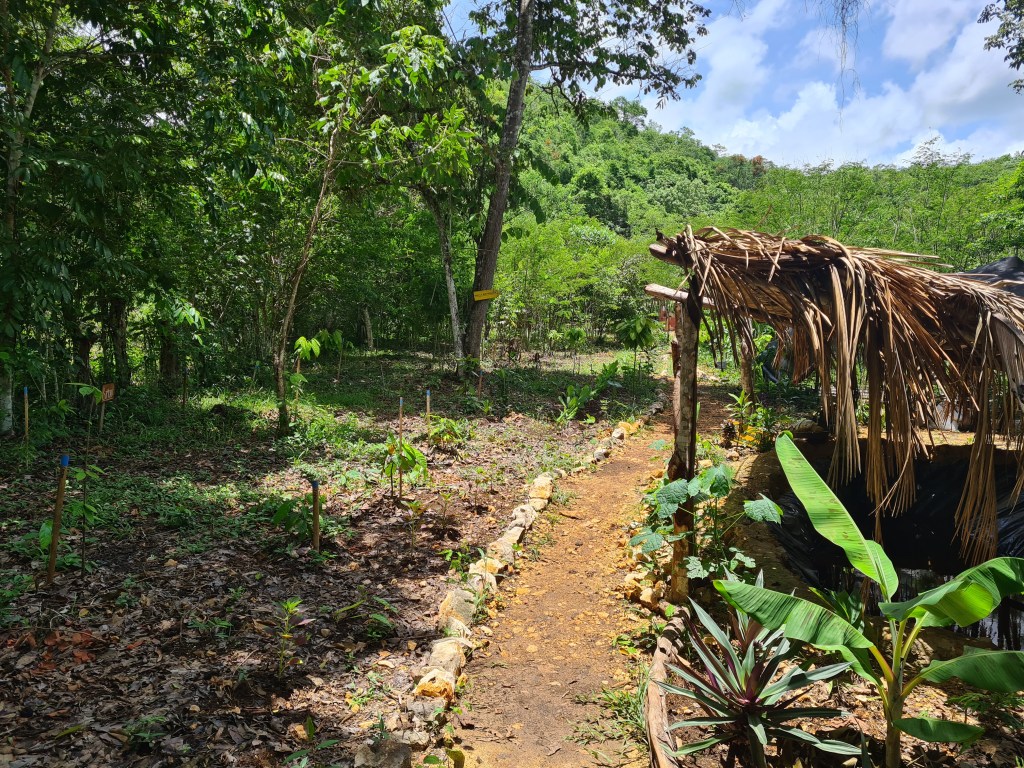
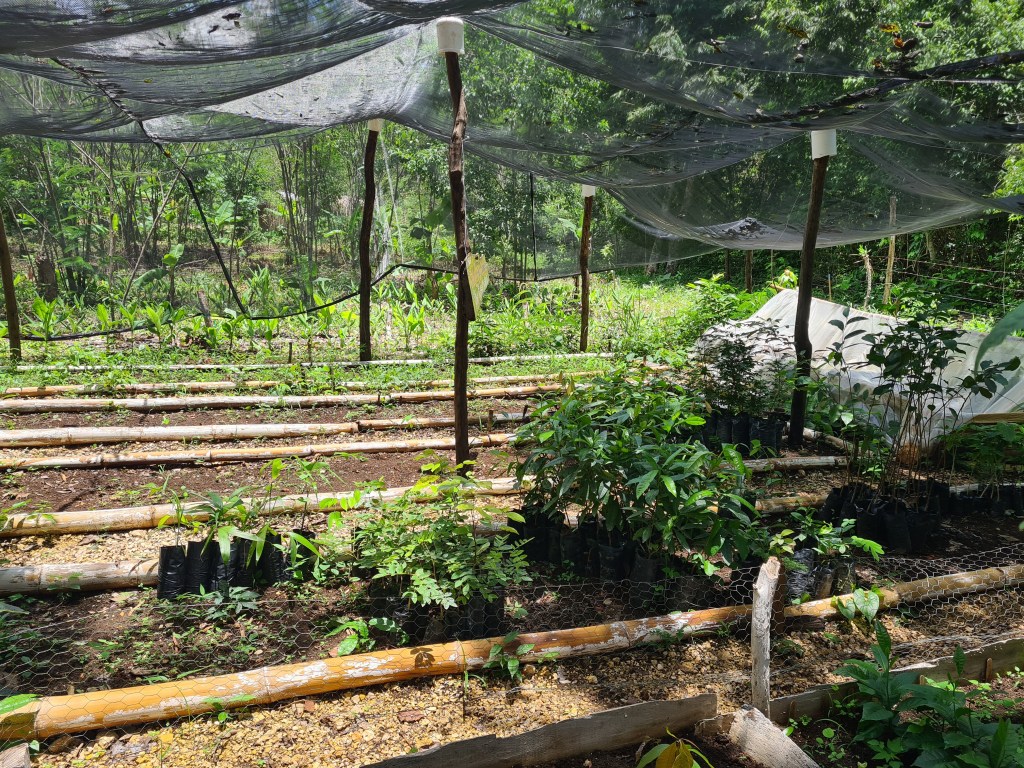
The project grows crops such as cacao, water melon, lemon, oranges, chaya maya, plantain, ginger, coriander, cucumber and the infamous turmeric. Agriculture is challenging in this part of the world as the top soil is often only inches thick and lacking nutrients, and water quickly drains away into the cavern-riddled limestone beneath. But Sol y Verde employs traditional Mayan methods such as crop rotation, planting crops in formation to catch water running downhill, and keeping fish in ponds for fertiliser; fish excrement collects in the water which is then effective for watering the crops.
Sol y Verde was set up by Baltazar. Baltazar fled Honduras aged thirteen and travelled Central America for fifteen years. He previously tried to set up a treatment centre for drug addicts but local men, who objected to drug addicts being brought into the locality, arrived with guns one night and burnt the everything down. Baltazar has since turned his efforts and boundless energy to the environment instead.
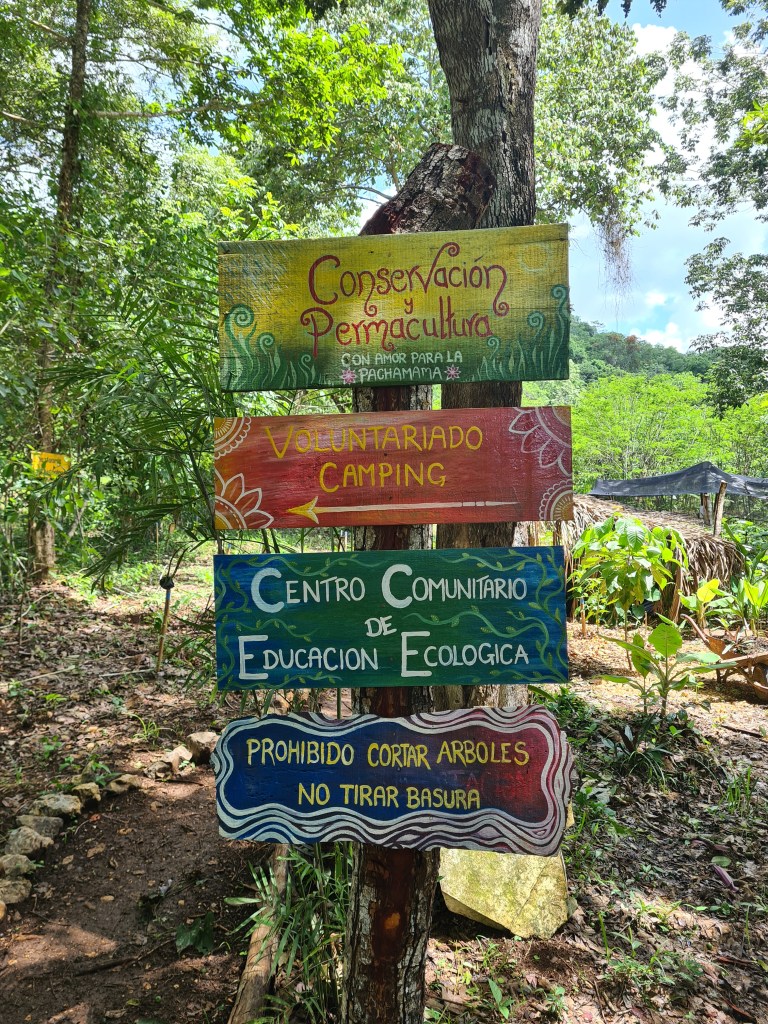
“We teach children how to live sustainably, because children are the future,” he says proudly, when showing off the area where school groups rest and take lunch when they visit Sol y Verde.
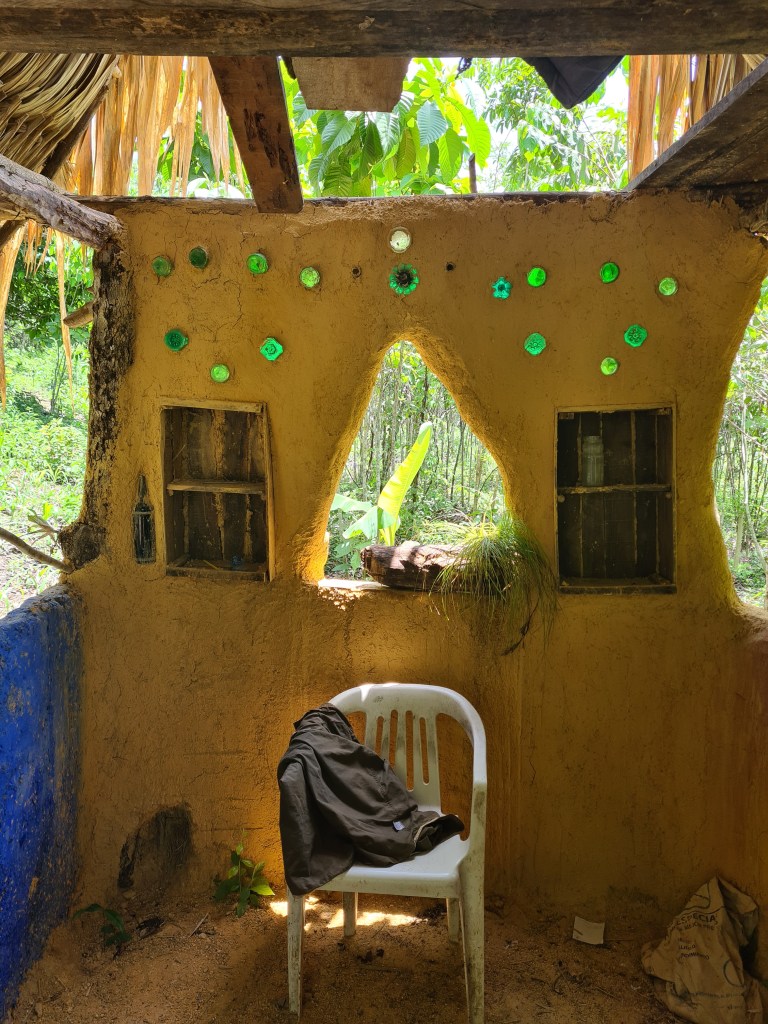
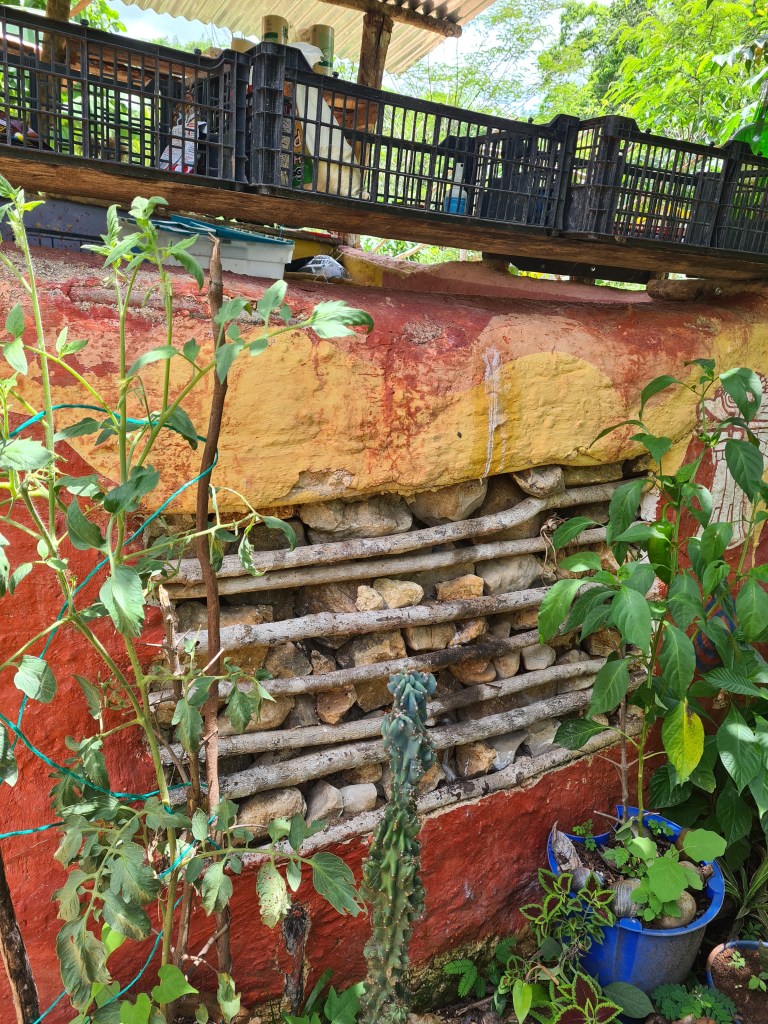
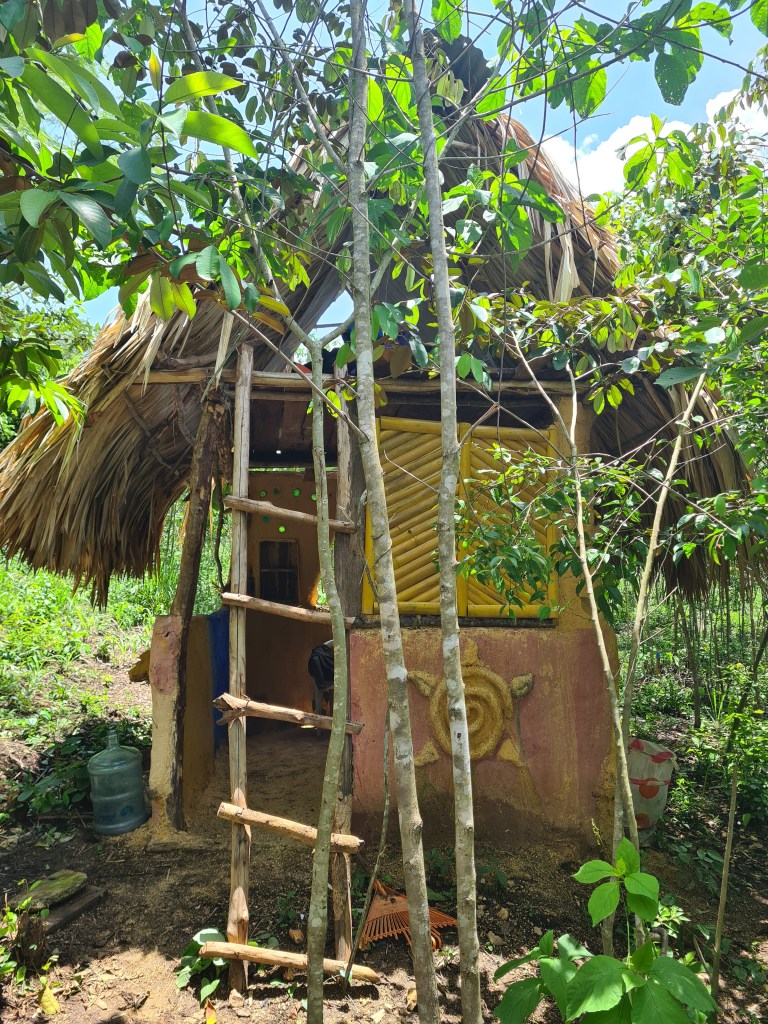
He also shows us how the Sol y Verde buildings are constructed using ancient Mayan methods. A wooden frame is filled in with rocks, and then plastered over with a type of soil or clay. He says that this is far sturdier than the plastic that many of the poorest locals build their dwellings out of, four times cheaper than conventional building materials and, crucially in this tectonically active area, earthquake-proof.
It can be difficult to know where to begin when considering voluntary aid. There were sad stories of donations to a nearby medical clinic in Santa Elena all going missing. Someone was eventually prosecuted, though successful convictions for corruption are rare since it is dangerous for the judges, many of whom emigrate. Some staff described how money donated for Covid was similarly ‘lost’, and the government deployed the military to quash protests regarding this.
Nevertheless, despite these challenges, there are organisations doing fantastic work and helping to change lives for the better. Small organisations are often more difficult to find online, since their internet presence is limited, but they play an important role in the communities they serve.
If you are interested then I suggest you check out Project Ixcanaan. £25 would buy a few boxes of antibiotics or iron tablets, replenish the clinic’s depleted drug cupboard and treat those who need it most. This small organisation is making a big difference in El Remate.
 Somewhere Must Be Doing It Better
Leave a comment